Yellow-billed Stork
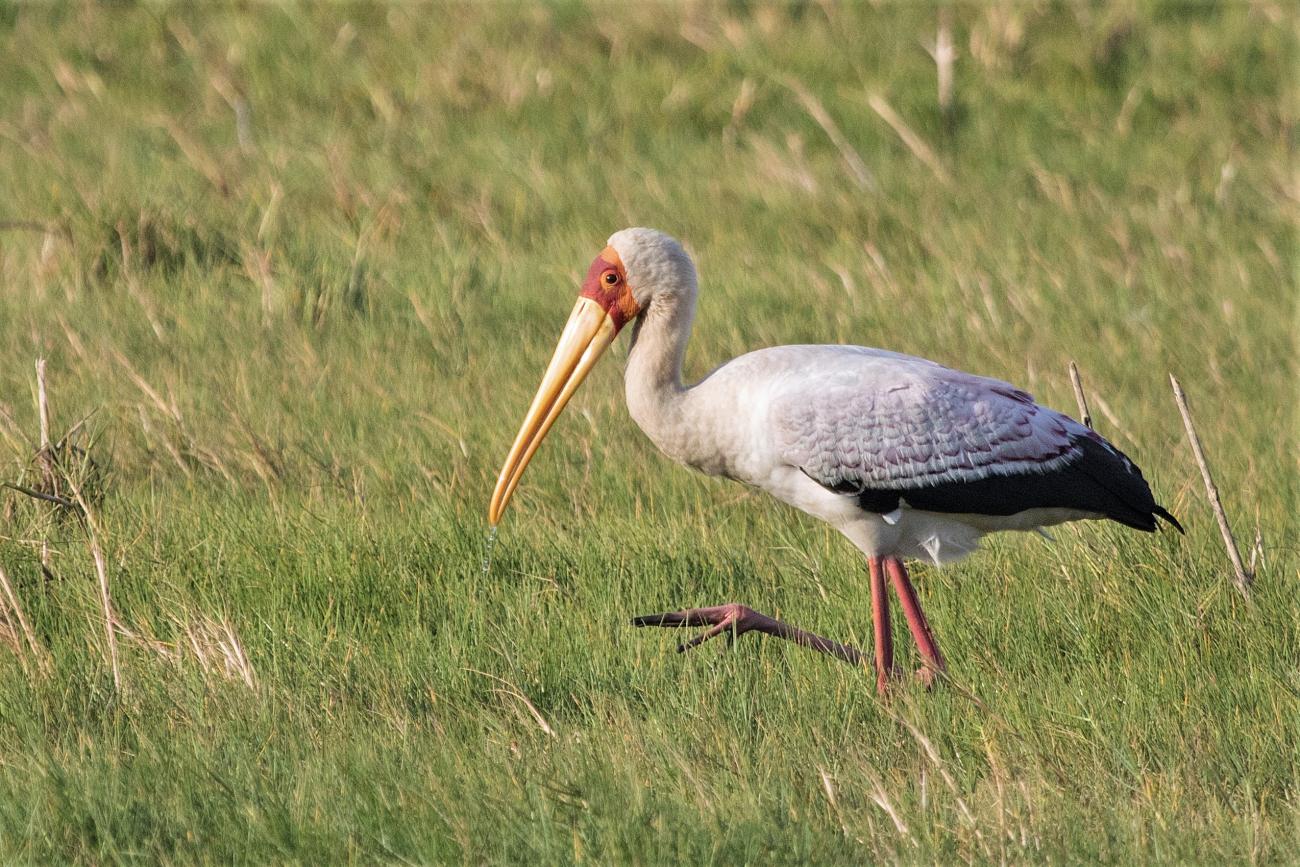
St Lucia Wetlands, KwaZulu Natal, South Africa
The yellow-billed Stork is found throughout sub-Saharan Africa. It is classified by the IUCN as common to abundant but the species is threatened by habitat reduction and poaching.
Habitat
It frequents freshwater wetlands such as lakes, rivers, swamps and rice paddies, but is also found in or near brackish and saltwater locations such as lagoons, estuaries and mudflats.
Feeding
The yellow-billed prefers shallow water where if feeds on small fish, amphibians, molluscs, crustacea, insects and occasionally small mammals.
Breeding
The yellow-billed stork usually nests in colonies, sometimes even in towns. Both the male and female construct the nest choosing a high tree, a terrestrial site away from predators, or a small tree over water. Two to four eggs are incubated by both partners and chick rearing is also shared.
Wildfile Specials
- Yellow-billed storks engage in "Swaying-Twig Grasping": part of the mating display involves the male standing on a potential nest and gently picking up twigs and releasing them while swaying its head from side to side.
- Yellow-biiled storks excrete urine onto their legs in order to cool down. They also regurgitate water for their chicks so they can keep cool.
- Parents sometimes help to keep their chicks cool by spreading their wings to provide shade.