Blue Crane
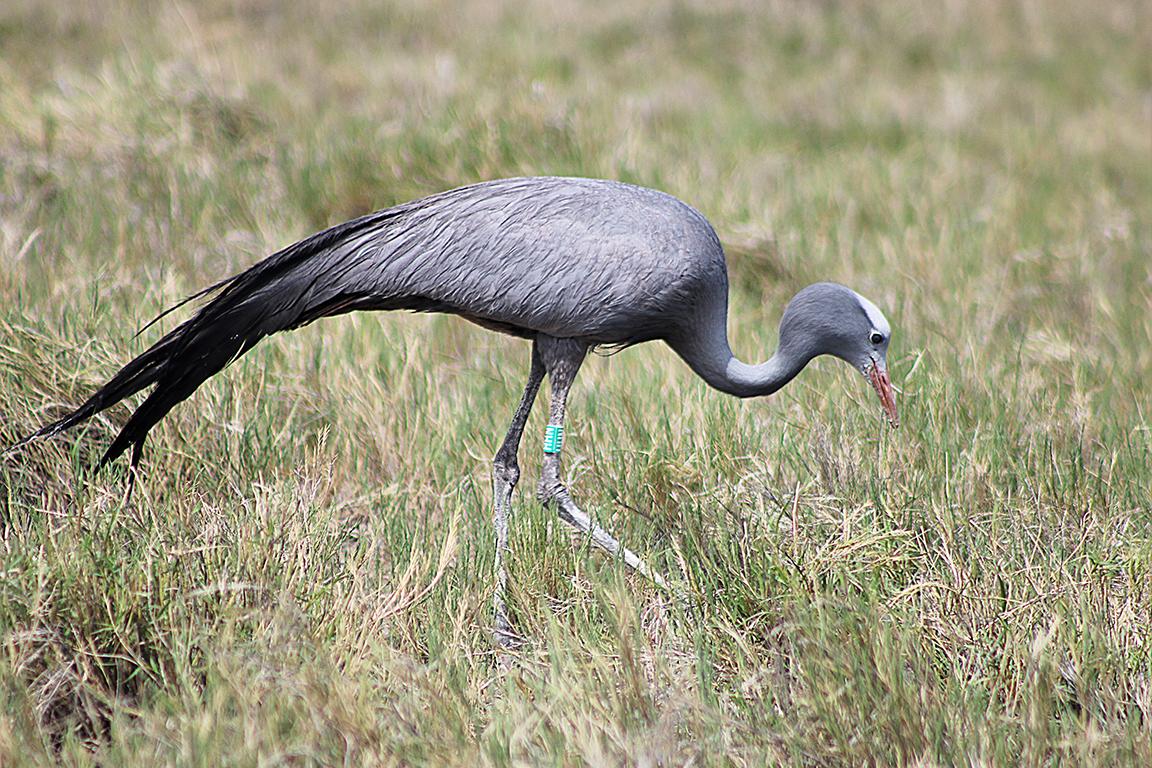
Etosha National Park, Namibia
Most remaining blue cranes are in eastern and southern South Africa with a small, isolated population found in the Etosha Pan where the picture was taken. Now classified by the IUCN as "vulnerable", the blue crane is nearly extinct in Eastern Cape, Lesotho and Swaziland and reduced in numbers by 90% in much of the rest of South Africa.
Habitat
Blue cranes are terrestrial (ground dwelling) altitudinal migrants: they nest at an altitude of around 1300 to 2000 metres and winter at lower altitudes. They prefer dry grasslands with scattered trees. During the breeding season, as well as choosing uplands, they like to be close to wetlands.
Feeding
Blue cranes are ground feeders grazing on grasses, sedges tubers, roots, cereal grains, and wheat. They also hunt insects, such as grasshoppers, and small animals including lizards, snakes, frogs, crabs and snails.
Breeding
Blue cranes are monogamous and bond for life. Both male and female incubate usually two eggs. The male often incubates and night and the female takes over during the day while the male aggessively defends their territory. The female is the main provider for the chicks and she will regurgitate food directly into their mouths. The precocial chicks stay with their parents until the following breeding season.
Wlidfile Specials
- Blue crane mating rituals include running in circles, throwing objects and jumping.
- Blue cranes are very aggressive to other animals who come close their nests even if they are not predators such as cattle, tortoises and sparrows! Humans have retreated bloodied and with torn clothes..
- Although a tall bird, the blue crane is small by comparison with other members of the crane family.
- The blue crane is also known as the paradise crane.
- The blue crane is the national bird of South Africa.
- The rapid reduction in blue crane numbers in recent decades is due to human population growth, grassland conversion to agricultural land and poisoning, often intended for other species.
- The Xhosa men of South Africa were awarded blue cranes feathers as a badge of honour for distinguishing themselves in battle.
- Zulu leaders and warriors also wore blue crane feather headresses.